
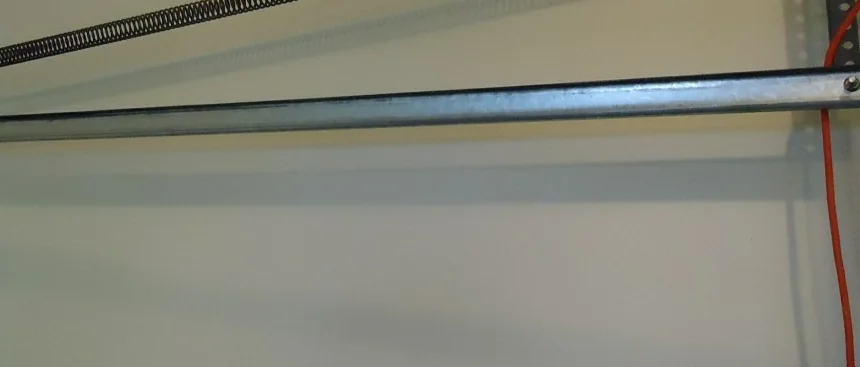
Garage Door Spring Repair in Oxnard
When a spring breaks, the door you lifted with one hand weighs what it really weighs. Keep it closed, stay out from under it, and call before the opener burns itself out trying.
How do you know a spring is the problem?
Springs rarely fail without a warning or two. These six point straight at the spring rather than the opener.
A bang from the garage
The classic torsion break. Look for a gap in the coil on the bar above the door.
Door feels like concrete
With its spring gone, the full weight of the door lands on whoever lifts it.
Opener lifts a few inches
The motor senses the load, stops, or reverses. The opener is fine; the spring is not.
Door creeps down
Left open, it drifts toward the floor. That is a spring short on torque.
Orange flakes on the coil
Rust. Near the coast it pits the wire, and fatigue cracks start at the pits.
No cable through the spring
An extension spring needs a containment cable, or a break sends it flying.

Why springs fail early near the Oxnard coast
Because a spring is a steel wire living in salty, damp air. DASMA's guidance on spring life names sites near salt-laden coastal air alongside rust, wrong sizing and extra door weight as reasons springs break before their rating. The coast here is mild, with August afternoons only about 9 F warmer than January at the Oxnard station, but May Gray and June Gloom keep the marine layer, cool damp air under low cloud, hanging on into early summer. Age adds the rest: standard springs are commonly rated around 10,000 cycles, and the median Oxnard house dates from 1977. Spring work covers torsion and extension springs, containment cables, cables, drums and bottom brackets.
- ✓ Tension made safe first
- ✓ Measured, not copied
- ✓ Rust checked on cables
- ✓ Containment cables fitted
- ✓ Balance proven at the end
- ✓ Opener reversal rechecked
Measured, then wound
A replacement that only matches the broken spring's length can still be wrong for the door. The size comes from the door.
Wire, diameter, length
All three set the torque, and all three are checked against the door's weight.
Wind direction
Left- and right-hand torsion springs are not interchangeable. A backward wind is a hazard.
Turns counted
Too many overload the hardware. Too few let the door drift down.
Weight checked
A door that gained paint, glass or a new panel may need weighing with the springs disabled.
How a spring gets replaced
Safety first, sizing second, balance last.
Secure
Door clamped shut, opener unplugged, the remaining tension released with proper winding bars.
Size
Wire gauge, inside diameter, length and wind direction measured against the door.
Fit
New springs wound to the right turns, cables re-seated on both drums.
Prove
The door holds still at mid-height by hand, then runs a few full cycles.
Torsion or extension: which one do you have?
Look above the door first. A spring wrapped around a bar over the header is torsion; springs running beside the overhead tracks are extension.
- TorsionTwists to store torque on a shaft, which hands it to the cable drums. When it breaks, the shaft keeps it contained.
- ExtensionStretches as the door closes. It needs a containment cable threaded through it, which an inspection should confirm.
- LifespanOne guide puts torsion springs at roughly 8 to 15 years on a typical household door.
- High-cycleSprings built for more cycles than standard cost more and suit a door that runs many times a day.
Often found with a broken spring
A spring break jolts the cables and the opener too, so they get a look while the door is apart.
Spring Repair
Snapped or rusted springs swapped for ones matched to your door, with a safety cable threaded through side-mounted ones.
Learn more →
Opener Repair
Photo eyes that will not let the door close, stripped gears, dead remotes, travel limits that have wandered.
Learn more →
Opener Installation
A quieter belt drive, a sturdy chain unit or a wall-mounted motor, always with an outage battery as state law demands.
Learn more →
Off-Track and Cable Repair
Crooked, jammed or sagging on one corner? Usually a frayed cable or rollers that jumped their rail.
Learn more →
New Door Installation
Replacement sectional doors measured for headroom first, with the warranty's coastal clause read before you buy.
Learn more →Spring questions from Oxnard
Heard the bang?
Keep the door shut and give us a call. Tell us whether the spring sits on a bar above the door or beside the tracks, and the visit can be planned around it.